
Spiral Wound Gaskets: Construction, Color Coding & More
What Are Spiral Wound Gaskets?
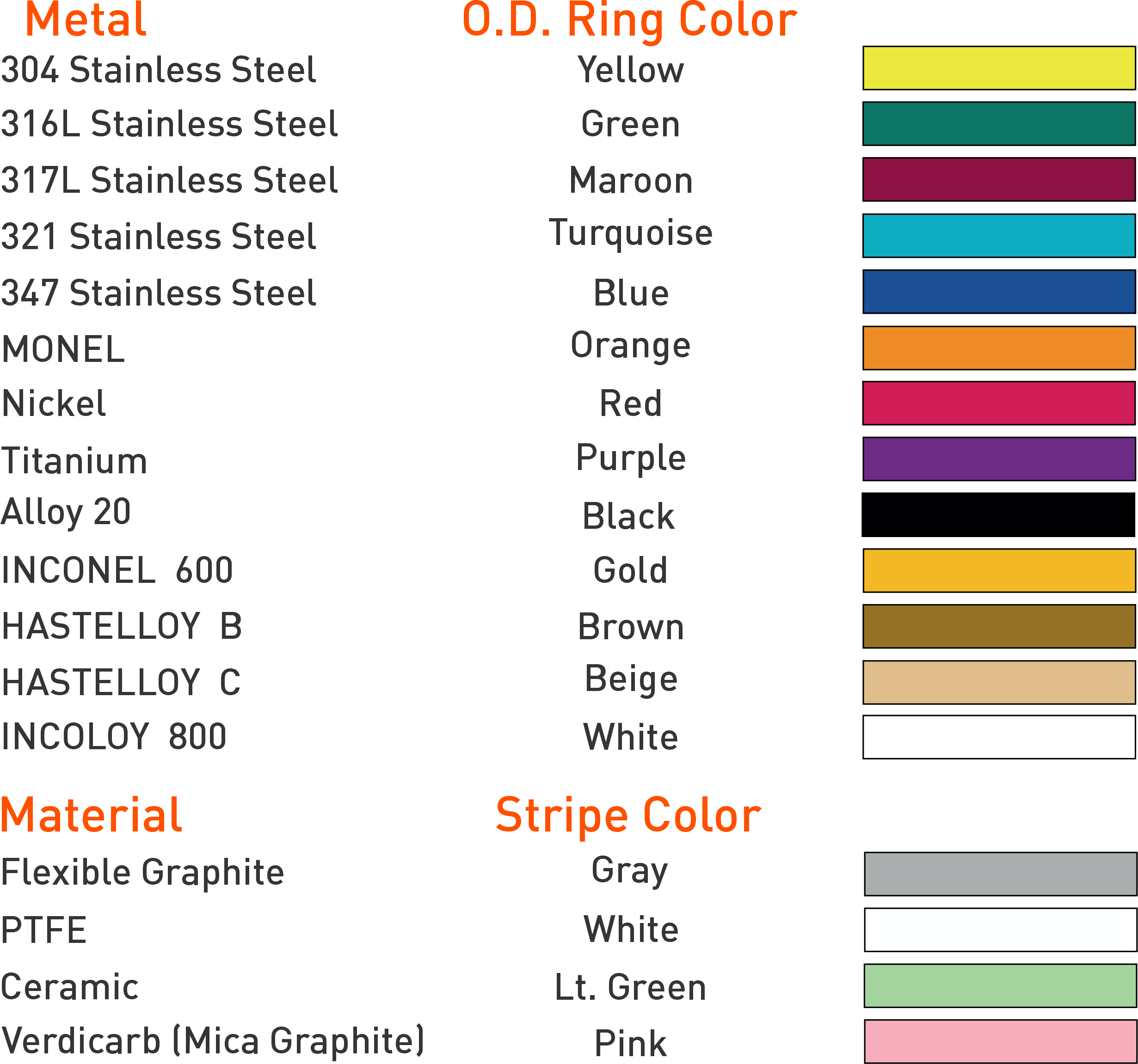
Spiral wound gaskets are engineered sealing elements designed to handle high pressures and temperatures, making them ideal for critical flange connections in pipelines, refineries, and industrial plants. They consist of a mix of metallic and non-metallic materials wound together to form a resilient gasket capable of maintaining a seal under fluctuating conditions. Many manufacturers currently fabricate their own spiral wound gaskets, with the majority specifying ASME B16.20 guidelines.
Construction
A standard spiral wound gasket includes:
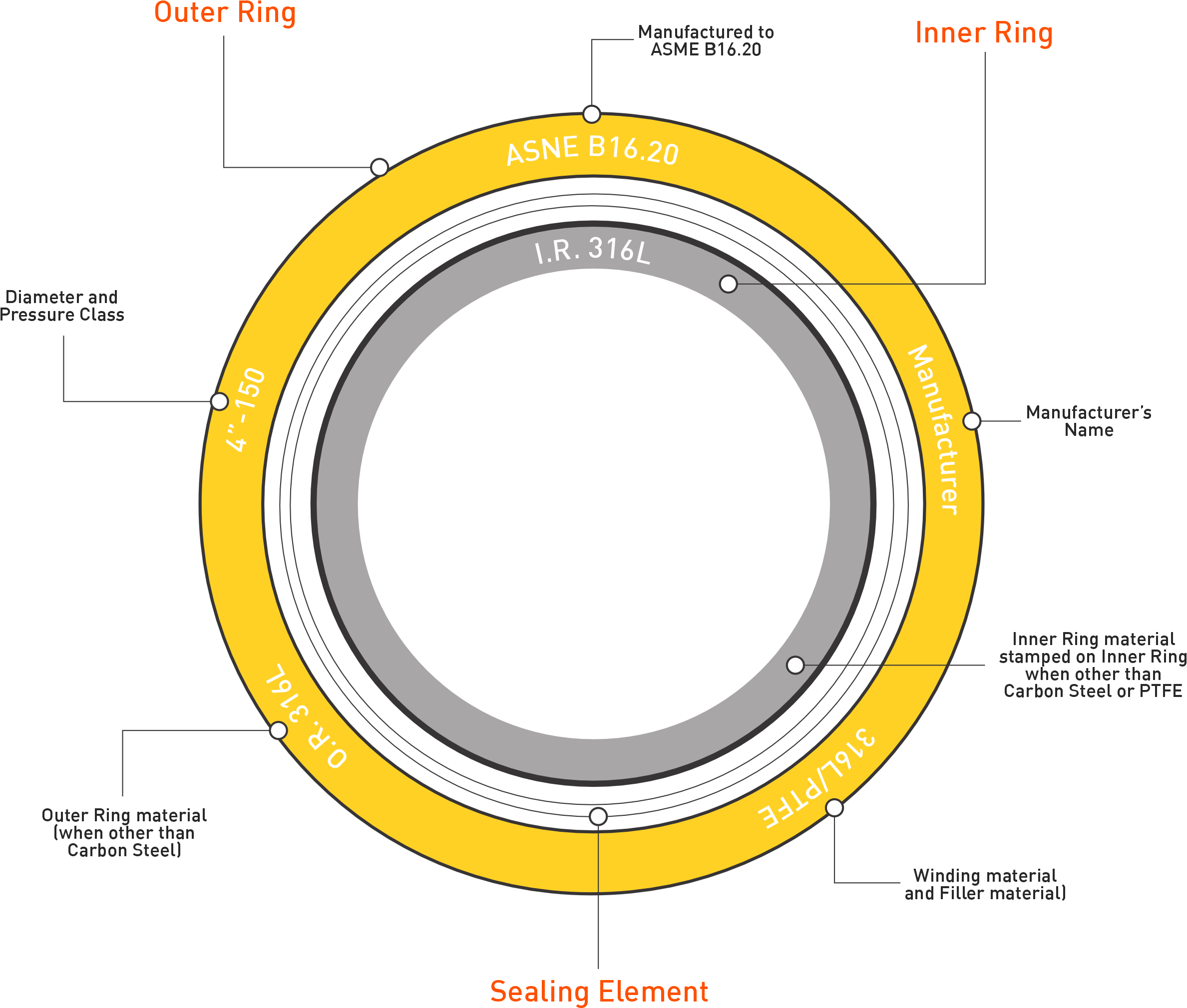
- Metallic Winding Strip: Forms the structural backbone, providing strength and resilience. Common materials include stainless steel or other alloys depending on chemical compatibility.
- Filler Material: Usually graphite or PTFE, the filler provides the sealing capability by filling minor flange imperfections.
- Inner Ring (optional): Protects the gasket from internal media, reducing turbulence and preventing the filler from protruding into the pipe bore.
- Outer Ring (centering ring): Facilitates gasket installation by centering it within the flange bolt circle and acts as a compression limiter to prevent over-compression.
Application
ASME B16.20 gaskets were designed for use in ASME B16.5 and ASME 16.47 A/B flanges. Dimensions are standard for each Nominal Pipe Size and Pressure Class flange assembly combination. Request the materials for the winding metal and filler, which should be compatible with the piping and the media to be sealed.
| MATERIAL PROPERTIES | |||||
| Filler Material | Max. Temperature | ||||
| PTFE | 500°F (260°C) | ||||
| Flexible Graphite | 842°F (450°C) | ||||
| XHR-MICA / Oxidation Resistant FG / MICA | 1500+°F (815+°C) | ||||